Blog
India as a Strategic Location: Manufacturing, Sourcing or Engineering?
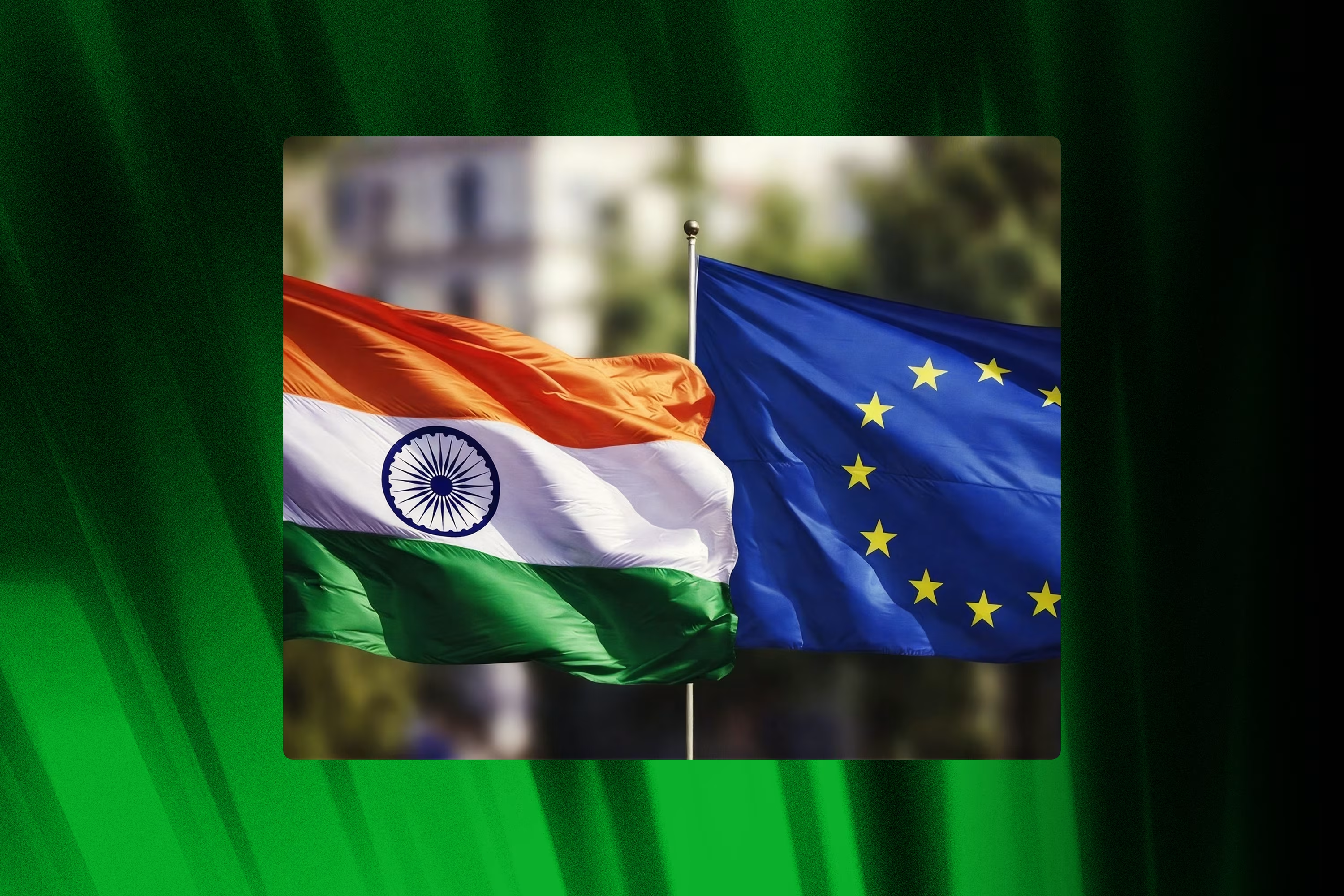
This article was co-authored with Stefan Halusa, former Director General of the Indo-German Chamber of Commerce, and Mauritz Halusa, co-founder of Halusa Advisors
How European Supply Chains Can Leverage the Indian Market and the Trends Shaping These Decisions
When people talk about India, the growth rate is usually the first thing mentioned. At 7.6 percent in the current fiscal year, the country is growing faster than any other major economy. With a GDP of around 4.1 trillion US dollars, it now ranks fourth globally. However, the growth rate alone is of little value when assessing a procurement market. The more interesting question is where that growth comes from, as its sustainability and implications for European companies depend on it.
India differs here from other growth stories, most notably China. China’s rise in the 2000s was heavily export-driven and thus dependent on demand from Europe and the US, whereas India’s growth is more internally generated. With around 1.4 billion people, a median age of 29, a growing middle class, and infrastructure development that generates additional demand for years to come, the country possesses a domestic market capable of sustaining a much larger share of its own growth. This does not make India independent of the global economy, but it does make it less dependent on individual export markets.
The fact that this development has long since reached European procurement is evident in the trade figures. Bilateral trade volume with Germany reached a record 35.4 billion US dollars in 2025, while German imports from India increased by 12.5 percent that same year. Anyone looking at India today is no longer entering an untapped market: around 2,000 German companies are already active on the ground, about 800 of which have their own production facilities.
A similar picture emerged among the participants of our webinar with Halusa Advisors in mid-September. Half are already purchasing in India, 29 percent are selling there, and 18 percent are producing locally. The import mix shows which product groups are finding their way to Europe: chemical products lead with around 20 percent, followed by clothing at 15 percent, machinery at 13 percent, and electronics at 11 percent. India is therefore neither exclusively a supplier of simple consumer goods nor yet the extended workbench for highly complex industrial products. Among the webinar participants, however, the weighting was significantly more industrial: 74 percent see the country primarily as a procurement market for tools as well as metal and plastic components.
This trend is reinforced by the cost side, which remains the most important argument for European companies. 69 percent of respondents cited factor costs and price advantages as a motive for engaging in India, followed by access to the growth market at 51 percent and diversification away from the concentration risk of China at 40 percent. A skilled worker in India costs between 15,000 and 30,000 euros per year. Although wages are rising by nine to ten percent annually, the depreciation of the rupee against the euro has more than offset this effect recently. However, a long-term business case should not rely on this constellation, as a favorable exchange rate is a temporary advantage rather than a structural location factor.
India pursues its own interests in a turbulent neighborhood
Anyone evaluating India as a procurement or production location cannot avoid the question of political reliability. Following experiences with Russia and China, this question is being asked much more carefully today than it was ten years ago. Among our webinar participants, nearly 39 percent cited uncertainties in the geopolitical environment as a concern.
When it comes to India, however, the answer is different from what the classic division into political camps would suggest. The country is less a partner that aligns with one side than one that consistently pursues its own interests. Those who understand this can plan with India; those who expect political loyalty to a specific camp, however, will be regularly disappointed.
This stance has primarily geographical reasons. India shares borders with China and Pakistan, the courses of which remain partially disputed to this day. The wider neighborhood, from Bangladesh to Myanmar, also remains politically volatile. For a country in this position, an exclusive commitment to one power bloc would entail significant strategic costs, as it would limit its own room for maneuver with other partners. Over decades, this necessity has given rise to a foreign policy doctrine often summarized today under terms like "multi-alignment" or "omni-alignment," which is also expressed in Indian government rhetoric through the concept of the Vishwamitra, or "friend of the world."
In practice, this leads to a simultaneity that can initially seem contradictory from a European perspective: India is a member of BRICS alongside Russia and China, forms the QUAD with the US, Japan, and Australia, and belongs to the G20 just like the Western industrialized nations. This is less about maneuvering between camps and more about the attempt to maintain a functioning relationship with as many sides as possible without becoming completely dependent on any one of them.
For European companies, this very independence is both an opportunity and a risk. It makes India a potential alternative within more diversified supply chains, but it also means that New Delhi will not automatically align its economic policy decisions with European interests.
EU Free Trade Agreement: What does this mean for trade with India?
Talks on a free trade agreement between the EU and India date back to 2007 and were effectively on ice for years because India wanted to protect its domestic market while the EU pushed for greater market opening. The negotiations only gained new momentum when both sides developed a greater interest in an agreement for different reasons: Europe is looking for alternatives to China, while India is seeking additional sales markets and stronger economic anchoring in Europe.
After nearly two decades, the negotiations have now been concluded, though this does not mean the agreement is already in effect. The necessary political and legal steps are still pending, so existing tariff rates will continue to apply until it enters into force. In September, the EU Commission proposed the signing to the Council. Subsequently, the agreement must still be ratified by the parliaments in Brussels and New Delhi. It is expected to enter into force in 2027.
In terms of content, the focus is primarily on reducing tariffs on industrial goods, although the starting position on both sides is very different. While the EU imposes comparatively low tariffs on Indian goods on average, Indian tariffs on European products are significantly higher. At the same time, sensitive areas remain excluded from full liberalization. The European CBAM mechanism remains in place, and the investment protection agreement is not part of the package but is being negotiated separately.
For companies, therefore, the actual impact on their own business case is more decisive than the political headline. On the European import side, the relief is on average smaller because EU tariffs on industrial goods are usually already low. However, it is not insignificant, as the regular EU tariffs currently apply to Indian goods. Companies that sell European products to India and have previously faced higher trade barriers will benefit significantly more.
Above all, a free trade agreement does not automatically solve the problems that companies actually face when building an Indian supply chain. BIS certifications, industry-specific market access rules, auditing, quality assurance, and freight costs do not disappear just because a tariff rate drops. This is also reflected in our survey: 76 percent of participants cited quality assurance at suppliers as a challenge, and 42 percent mentioned administrative effort.
For the business case, this leads to a simple rule: it should work under the conditions that apply today. If a procurement or production decision is viable under current tariff conditions, it will remain robust even if the agreement is delayed. If the tariff relief is added later, it becomes an additional margin rather than a prerequisite for the investment decision. However, waiting is not a neutral option: those who act now and qualify suppliers will have a resilient supply chain when the trade agreement takes effect. Those who wait until it enters into force will only begin their search then.
The real decision is: what role should India play?
For many companies, India's strategic role has not yet been fully determined. In our survey, 39 percent described the importance of India within their Asia strategy as growing, 22 percent are taking initial steps, and 24 percent have not yet defined a clear role. Only 15 percent currently describe the country as central.
This is hardly surprising, because in practice, the question of "India" hides several very different decisions. Those who procure there primarily evaluate suppliers, costs, quality, and the ability to reduce existing dependencies. Those who produce there, on the other hand, tie up capital for years and must therefore additionally consider infrastructure, regulation, legal certainty, and access to the Indian domestic market. Those who view India as a development location are making a different decision entirely, where the focus is less on low production costs and more on access to technically trained specialists and a mature engineering and IT landscape.
The question is therefore not simply whether India is attractive, but for what purpose. Sourcing a metal part from India for the European market follows a different logic than setting up a factory there. Both differ from the decision to relocate development services to India. Accordingly, tariffs, labor costs, exchange rates, regulation, and geopolitical risks have different impacts on each respective business case.
Added to this is the factor of time. Especially in industrial supply chains, a change is rarely possible in the short term, as twelve to eighteen months can pass from the search for a suitable supplier through auditing and sampling to stable series production. Anyone making a decision today must therefore not only evaluate today's conditions but also keep an eye on developments that could shift the business case during this period.
Which developments are now becoming decisive
The first priority is the further implementation of the free trade agreement. For procurement, it is crucial when the agreed tariff reductions actually become effective, while for one's own production capacities, the separately negotiated investment protection agreement is likely to be at least as relevant in the long term. How quickly it comes about is also a good indicator of whether the political step of the trade agreement will turn into a resilient economic partnership.
The second factor is India's relationship with the USA, because changes in American trade policy directly affect Indian exporters and can therefore also change the calculations of European companies. The past year has shown how quickly conditions can shift here: starting at the end of August 2025, Washington originally imposed tariffs of 50 percent on Indian goods, half of which was a surcharge for oil purchases from Russia. With a framework agreement in February 2026, this surcharge was dropped. In this context, the relationship with Russia remains a political indicator: how far New Delhi is willing to scale back economic relations with Moscow in favor of better trade conditions with the West shows how much pressure India's "omni-alignment" is under.
The third factor is the development of exchange rates and wages, which must be viewed together. From a European perspective, the weakness of the rupee has so far compensated for some of the Indian wage increases. If the exchange rate turns while wages continue to rise by nine to ten percent annually, the cost calculation can change accordingly quickly. This is precisely why it would be short-sighted to view India exclusively as a low-cost location.
The more productivity, engineering competence, local procurement, and access to the domestic market are factored into the calculation, the more robust the location decision becomes. This is also the decisive change in the European view of India: the question is increasingly no longer whether the country should be part of one's own supply chain, but what role it can take within it.
For some companies, the answer will be procurement, for others production or development, and for many a combination of these. The key is not so much to predict the development of the coming years exactly, but to create a business case that does not depend on a single assumption. Those who find India attractive only because of today's exchange rate or potential tariff cuts are building on shifting ground. Those who, on the other hand, consider costs, market, competencies, and diversification together can turn a favorable procurement market into a long-term component of their value creation.
For a deeper look at the topic, watch the recording of our joint webinar with Halusa Advisors in the Tacto Academy.