Webinar
Webinar Recording: When the ERP Reaches Its Limits as Documentation Requirements Grow - A Practical Report from Zerhusen
PPWR, CBAM, EUDR, LkSG: Regulatory requirements for industrial procurement will significantly increase in 2026. At the same time, ERP systems are reaching their limits when it comes to flexibly managing supplier documents, certificates, and compliance evidence. The result: manual processes, Excel spreadsheets, and scattered information in email inboxes. The case study from Zerhusen Kartonagen shows how a medium-sized packaging manufacturer solved this problem.
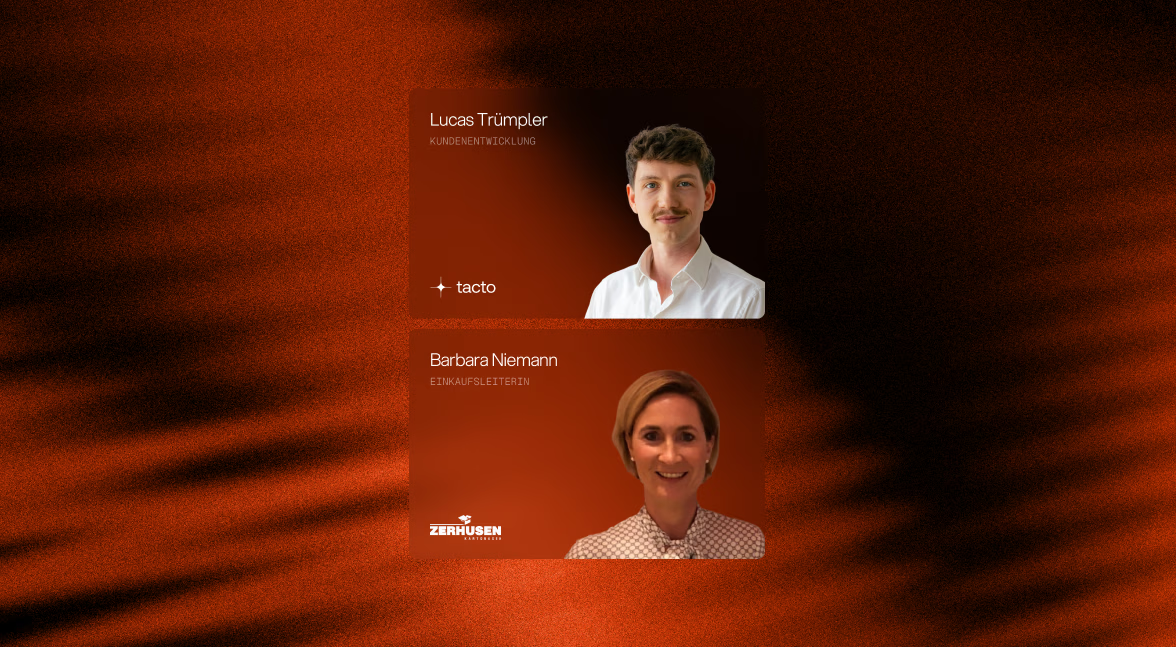
In the webinar, Barbara Niemann (Head of Purchasing at Zerhusen Kartonagen GmbH & Co. KG) and Lucas Trümpler (Customer Value Manager at Tacto) demonstrate how Zerhusen transitioned from ERP-supported document management to a complete Supplier Relationship Management system, thereby structuring and automating compliance requirements today.
Regulatory Pressure Meets Rigid ERP Structures
Zerhusen Kartonagen, a manufacturer of corrugated cardboard packaging for industry and retail based in Damme, is a prime example of a challenge facing many mid-sized manufacturing companies: the number of certificates and documents that must be provided per supplier is growing steadily. ISO 9001, ISO 14001, FSC, and REACH have been standard for years. With CBAM, the EU Packaging Regulation PPWR (effective August 2026), and the Deforestation Regulation EUDR, new and time-critical requirements are being added. Zerhusen had previously used a program called QMS 9000 for document management, which could manage expiration dates with reminders. When it was discontinued, the team faced a choice: hire more staff or find a digital solution. The ABAS ERP system did offer document management, but no reminder function for expiring certificates and no flexibility for individual supplier requirements. Barbara Niemann sums it up: "Excel is not digitalization. Nothing is older than yesterday's Excel list."
320 Key Suppliers, 3,200 Hours of Manual Effort
With approximately 2,000 suppliers in total and around 320 A and B suppliers requiring intensive certificate management, Zerhusen estimated at least ten hours per supplier per year for manually requesting, tracking, and filing documents. This amounted to over 3,200 hours annually, tied up in administrative tasks instead of strategic purchasing work. Additionally, there was the risk of knowledge loss: if a responsible person was absent due to illness, parental leave, or retirement, no one would know which processes were pending. Barbara Niemann describes the decisive advantage of a software solution: "A program doesn't get sick. It's always there, and it's a stable friend."
From SRM Selection to PPWR Preparation
Zerhusen discovered Tacto at the BME Purchasing Meeting in Mannheim and evaluated a total of three providers based on a formal requirements specification. Crucially, the solution not only allowed for individual queries but offered complete supplier management: individual document requirements per supplier, automated reminders, a supplier self-service portal, and configurable questionnaires. The connection to the ABAS ERP is established via a weekly data pipeline: every Sunday, supplier master data, classifications, and status values are automatically synchronized. The IT department benefits from all compliance-related requirements being managed in the SRM rather than the ERP.
In daily operations, Zerhusen uses Tacto for all certificate management: the system identifies expiring documents, automatically contacts suppliers, and allows for direct submission via the supplier portal. For ISO 9001 audits, Zerhusen can demonstrate the current document status of all suppliers at any time without having to manually search through folders. To prepare for the PPWR, Zerhusen uses the platform to send structured compliance inquiries to suppliers.
Conclusion
The case study of Zerhusen Kartonagen illustrates that ERP systems and SRM solutions are not competitors but complementary tools. The ERP represents the transactional core, while the SRM handles flexible supplier management and compliance. The difference lies in clear processes, internal commitment, and the willingness to actively integrate suppliers into digital workflows.
Barbara Niemann (Head of Purchasing at Zerhusen Kartonagen) and Lucas Trümpler (Customer Development at Tacto) report on how Zerhusen transitioned from manual certificate management and Excel spreadsheets to structured Supplier Relationship Management. In the webinar, they demonstrate how the company reallocates over 3,200 hours annually from administrative compliance tasks and systematically prepares for PPWR, CBAM, and EUDR today.



