Webinar
Webinar Recording: Sustainable Mid-Market: Between Sustainable Transformation and Global Competitiveness
In a time characterized by crises and regulatory measures, the question of the future of the mid-market arises. Particularly in the area of procurement, three significant challenges stand out: rising energy and raw material prices, the necessity of sustainable and resilient supply chains, and the fulfillment of ESG reporting obligations.
In today's economic landscape, mid-market companies face the dual challenge of remaining globally competitive while implementing sustainable strategies. The Tacto webinar comprehensively addressed this central issue and presented the most important trends, regulations, and strategic approaches that companies should consider today for a successful future.
Sustainability as the foundation for future-proofing
Sustainability has long ceased to be merely a trend topic – it forms the foundation for a company's future viability. Karl von Carlowitz, the founder of modern sustainability thinking, once said: "Sustainability is the foundation for long-term success." In mid-market companies, it is important to put this philosophy into practice by not only fulfilling legal requirements but also viewing sustainability as a strategic opportunity.
The role of regulation
The Corporate Sustainability Reporting Directive (CSRD) and the Supply Chain Due Diligence Act (LKSG) are central regulations that have a significant impact on mid-market companies. With mandatory reporting pursuant to the CSRD, companies are now compelled to transparently present their sustainability strategy in terms of ecological, social, and economic aspects. The German Supply Chain Due Diligence Act and its European counterparts require comprehensive oversight of the entire supply chain to prevent human rights and environmental violations.
Impact of regulation:
- Supply Chain Due Diligence Act (LKSG): Applies as of 2024 to companies with more than 1,000 employees. In the future, mid-market companies will also be indirectly affected through the requirements of their customers.
- CSRD: Applies from 2025 onwards to mid-market companies that exceed certain revenue or employee thresholds. Approximately 15,000 companies in Germany are facing new requirements here.
These regulations demand high transparency regarding ESG-related activities (Environmental, Social, Governance) and require compliance with human rights and environmental standards throughout the supply chain.
Challenges in the mid-market
According to surveys, mid-market companies in particular view increasing complexity and additional resource requirements as the greatest challenges in implementing sustainability measures. Often, specialized departments or resources that focus exclusively on sustainability are lacking. Here are some of the central challenges:
- Complex supply chains: Comprehensive transparency and oversight of all links in the supply chain are necessary to meet the requirements of the LKSG.
- Skills shortage: Particularly for small and medium-sized enterprises (SMEs), the necessary expertise in the sustainability area is often lacking.
- High administrative burden: The regulations require standardized data collection, which is barely manageable without digital support.
Entry points for companies: How does sustainability become a strategic opportunity?
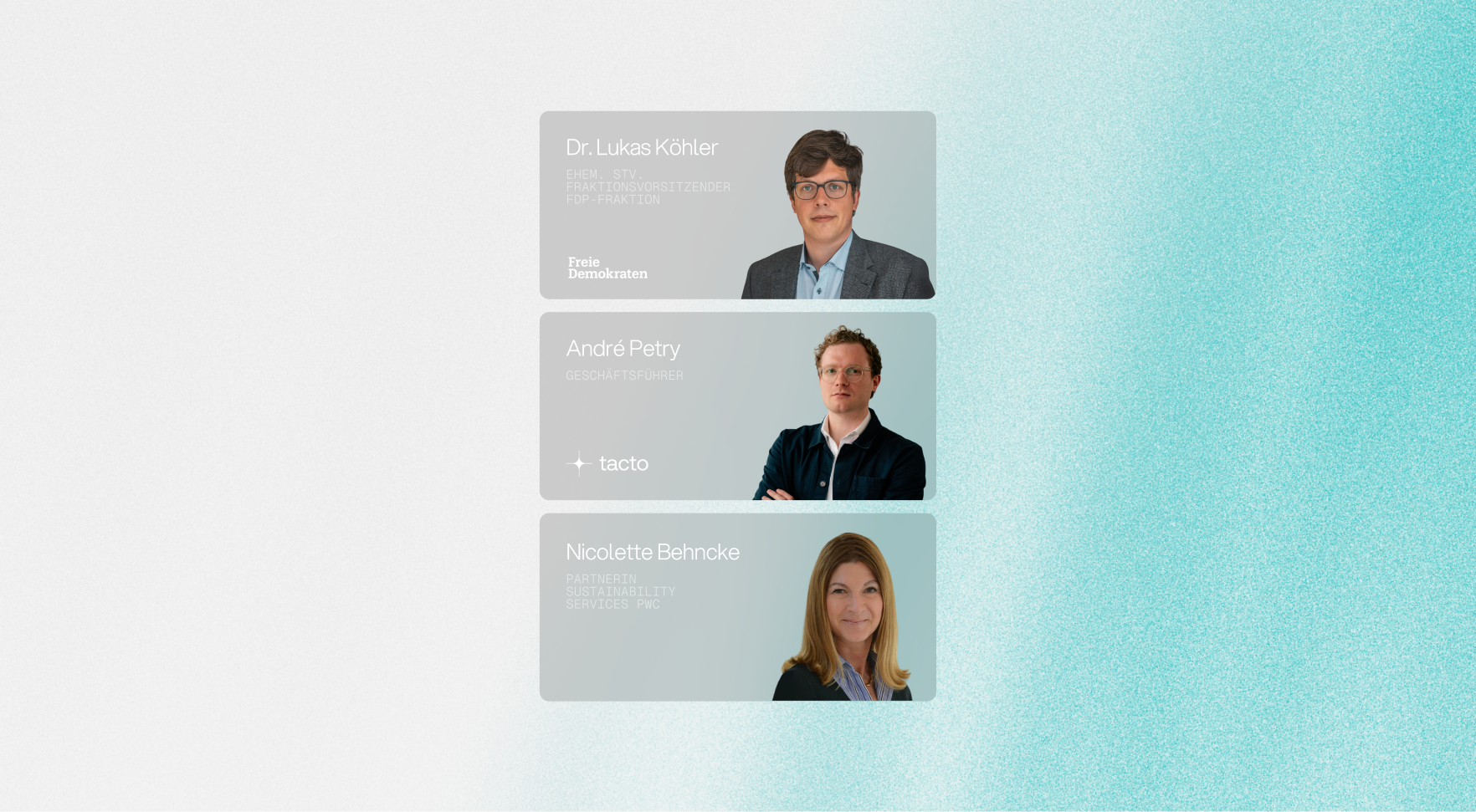
Nicolette Behncke from PwC, an expert in the field of Sustainability Services, emphasized in the webinar that sustainability is not a passing phenomenon. She recommended that companies embrace a continuous learning process and build internal resources.
Practical approaches to sustainable transformation:
- Integration into business strategy: Sustainability should not be viewed in isolation but rather established as part of corporate strategy. This way, relevant business units – from procurement through sales to production – are involved.
- Leveraging digital solutions: To reduce administrative effort and capture data centrally, digital tools are essential. They not only support report generation but also help track progress and drive continuous improvement.
- Building resources long-term: Sustainability is a cross-functional topic that affects various areas of the company. It is advisable not to rely solely on external consulting but also to develop sustainable know-how internally.
Tacto – digital solutions provider for sustainable supply chains
As a provider of a comprehensive supply chain solution, Tacto supports companies in integrating sustainability into procurement and meeting regulatory requirements. Tacto's approach combines efficiency and sustainability by digitizing processes and automatically capturing supplier data. This creates better transparency and enables companies to make strategic decisions based on relevant data.
Core benefits of the Tacto solution:
- Future-proof supply chains: Through comprehensive analysis, risks and emissions are identified throughout the supply chain and integrated into reporting.
- Compliance with minimal effort: Tacto enables simple fulfillment of regulatory requirements while minimizing administrative burden.
- Partnership approach: The solution was designed so that companies can bring their suppliers along on this journey and incorporate them into their sustainability strategy.
Conclusion: Sustainability as a competitive factor and market advantage
Sustainability offers mid-market companies the opportunity to establish themselves in the market long-term. Responsible action not only strengthens one's own market position but also enhances attractiveness as an employer and business partner. The requirements of regulation are not merely an obligation but can be understood as an opportunity to differentiate oneself from competitors and design more efficient processes internally.
Recommended actions for companies:
- Act now: Rather than waiting for perfect harmonization of regulations, companies should already begin integrating sustainability as a permanent part of their corporate strategy.
- Build digital infrastructure: Without digital support, sustainable transformation will hardly succeed. Investments in IT systems are therefore essential.
- Build resources and continuously educate: Sustainability must be lived in the company. Building and continuously developing internal resources are essential success factors.
The webinar shows that sustainable transformation and global competitiveness are not opposites but rather complement each other. Companies that invest in sustainability today secure a decisive competitive advantage in a rapidly changing market environment.
In our webinar: "Sustainable Mid-Market: Between Sustainable Transformation and Global Competitiveness," we discussed with Dr. Lukas Köhler, parliamentary group leader of the FDP, and Nicolette Behncke, partner in the area of Sustainability Services at PwC, about the sustainable transformation of companies.



