Webinar
Webinar Recording: Successful Cost Reduction in Practice – How SW Achieves Measurable Savings Through AI-Driven Negotiations and RFQs
Procurement organizations currently face the challenge of compensating for rising labor costs and geopolitical risks while under margin pressure. The manual preparation of data for negotiations is often too time-intensive to respond quickly to market volatilities with well-founded counterarguments.
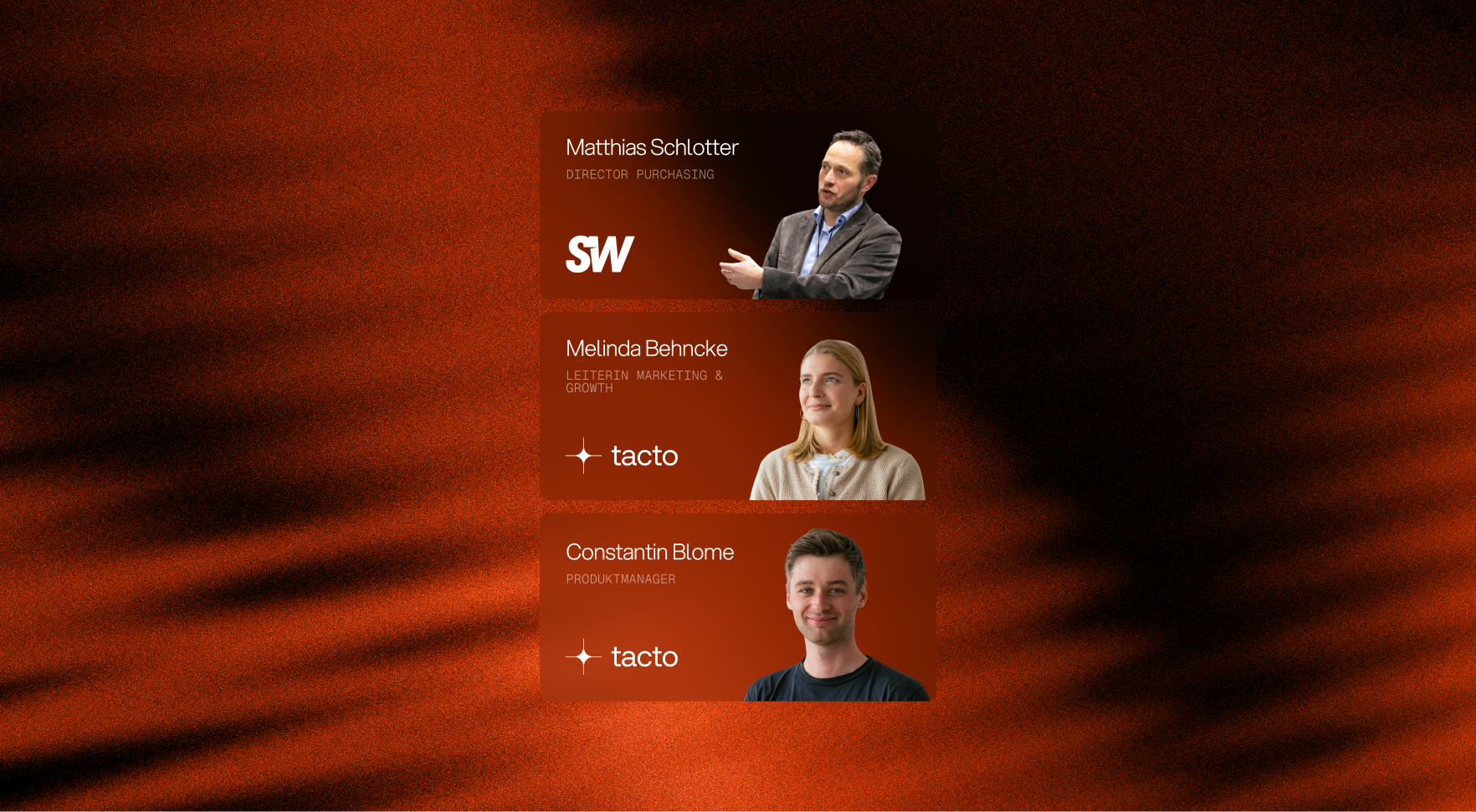
Matthias Schlotter (Director of Procurement at Schwäbische Werkzeugmaschinen), Melinda Behncke (Head of Marketing & Growth at Tacto), and Constantin Blome (Product Manager at Tacto) show in the webinar how SW automates data preparation through the use of specialized AI agents and systematically increases competitive pressure in the supplier portfolio through digital RFQs.
Starting Point
The market environment in mechanical engineering is characterized by below-average utilization and unpredictable price fluctuations in logistics. At SW, these external factors led to unplanned cost increases that cannot be fully passed on to customers. Before the transition, a lack of central documentation of negotiation results and limited access to external benchmarks made it difficult to consistently achieve savings targets.
Automated Negotiation Preparation
Through the use of a Negotiation Agent, relevant KPIs and cost breakdowns are generated for the procurement team without manual effort. For a screw-in connector, for example, the system identified price increases of up to 106% over the past 36 months. By cross-referencing with over 20,000 external indices, it was demonstrated that the supplier's demands were systematically above market average, enabling a precise price revision.
Digital RFQ Processes for Strengthening Competition
An RFQ Agent supports running tendering processes regularly with minimal administrative effort. Digitalization makes it possible to invite significantly more suppliers per request and directly compare offers. This increases the share of competitive procurement volume and secures better market prices for SW on an ongoing basis.
Central Controlling of All Savings Initiatives
To keep track of all levers – from supplier shifting to cost avoidance – SW uses central steering. AI-driven insights support procurement in identifying potentials early and documenting all results at a "single source of truth" in an audit-proof manner. This relieves strategic work from manual routine tasks and focuses on the active implementation of savings targets.
Conclusion
The SW case study illustrates that successful cost reduction today requires a shift from manual Excel analyses to a data-supported organization. The key is to equip procurement with the right tools to act quickly and fact-based in volatile markets.
Matthias Schlotter, Melinda Behncke, and Constantin Blome show in the webinar how SW uses automated data analyses and the targeted deployment of AI agents to revise price increases on a fact-based basis. The experts illustrate how digital RFQ processes increase competitive pressure without additional administrative effort and why central tracking of all initiatives sustainably secures strategic impact in procurement.

